The most revealing thing about the new generation of smart glasses is not the camera, the speaker or the assistant. It is the frame. Earlier attempts often looked like a computer insisting on being invited onto your face. The newer ambition is quieter: make an object that earns its place in a wardrobe before asking anyone to admire its circuitry.
That change sounds superficial only if we misunderstand clothing. What we wear is an interface between private identity and public interpretation. Glasses already communicate taste, profession, mood and sometimes vulnerability. Adding computation does not erase that language. It makes every signal more complicated.
The challenge is not hiding the computer. It is making its behaviour legible.
A face is shared space
A phone can be put away. Glasses remain directed at the room. That makes even an inactive device socially active: other people must decide whether a camera is recording, whether a microphone is listening and whether the wearer is paying attention to them or to something only the wearer can hear.
Good design therefore needs visible states that work for everyone nearby, not just the owner. A recording light must be difficult to obscure and easy to understand. Audio cues cannot carry the whole burden because the people being recorded may never hear them. Controls should make it faster to stop sensing than to start it.
The useful moments are small
The strongest case for face-worn computing is not a permanent layer of graphics over reality. It is a collection of brief interactions that allow the phone to remain in a pocket: directions at a junction, a translation during a conversation, the name of a song, a photograph taken without rearranging the moment.
That restraint matters. A device positioned inches from the senses can become exhausting faster than one held at arm’s length. The winning interface may be the one that knows how rarely it deserves attention.
Fashion is product infrastructure
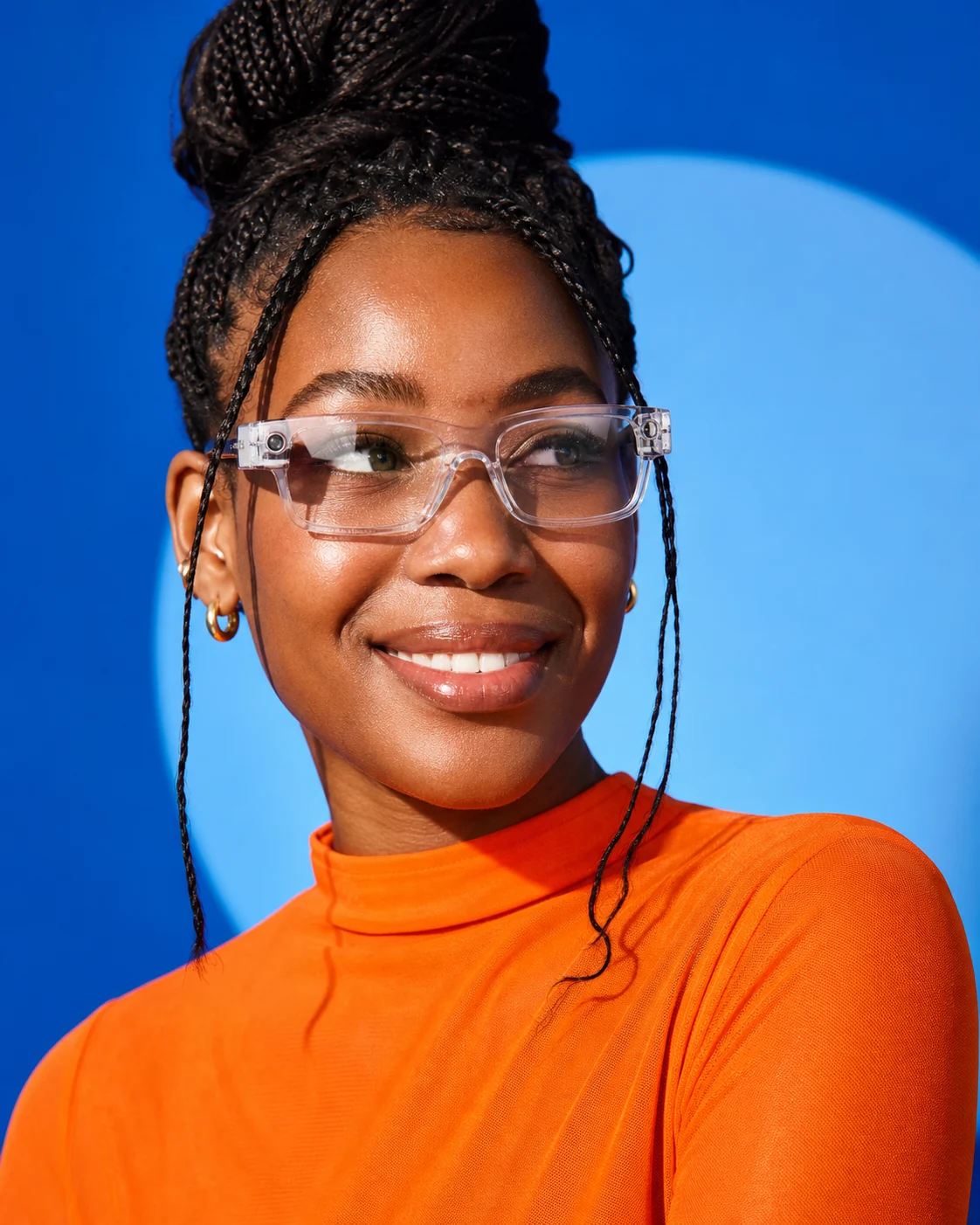
One frame cannot serve every face, prescription, culture or occasion. A mature category needs fit, repair, lens replacement, colour, material and price variation. It needs opticians and fashion partners as much as software developers. It also needs a believable answer to what happens when the battery ages but the frame still fits perfectly.
This is where technology companies often encounter the difference between a device and a possession. Devices are upgraded. Possessions acquire scratches, associations and value. If smart glasses are to become personal, their makers must support both timelines.
Trust must be part of the silhouette
The face computer will not arrive as a single dramatic invention. It will become normal through hundreds of small decisions about indicators, defaults, retention, repair and etiquette. Each decision tells the wearer what the product can do. More importantly, it tells everyone else what the wearer is allowed to do to them.
The best smart glasses will be attractive. They will also make power visible, interruption optional and removal easy. Taste gets them onto the face. Trust is what lets them stay there.