For years, every folding phone review began with an apology. The device was thicker, more expensive and more fragile, but look: the screen bends. The compromise was treated as the point. Owning one meant agreeing to participate in an experiment.
A category grows up when the unusual mechanism stops dominating every conversation. The fold is becoming less like a magic trick and more like a design constraint—one that can produce genuinely different tools when hardware and software agree on what the extra space is for.
A hinge is not a use case. It is permission for software to behave differently.
Two shapes, two jobs
A conventional phone asks one layout to serve every moment. A foldable can be a compact object for quick checks and a larger canvas for reading, planning or comparing. That sounds obvious, yet many early applications merely stretched their phone interface until the empty space became embarrassing.
The better approach treats posture as information. Half-open can support a camera preview above its controls. Fully open can place a document beside its notes. Closed can prioritise the handful of tasks worth doing without entering the larger interface.
The crease was never the deepest problem
Visible creases attracted attention because they were easy to photograph. The harder problems were predictability and confidence. Would an application restart when the device changed shape? Would a layout preserve what the user was doing? Could a repaired screen survive long enough to justify its cost?
Those questions are less glamorous than thinness, but they determine whether a device becomes ordinary. Reliability is what turns novelty into muscle memory.
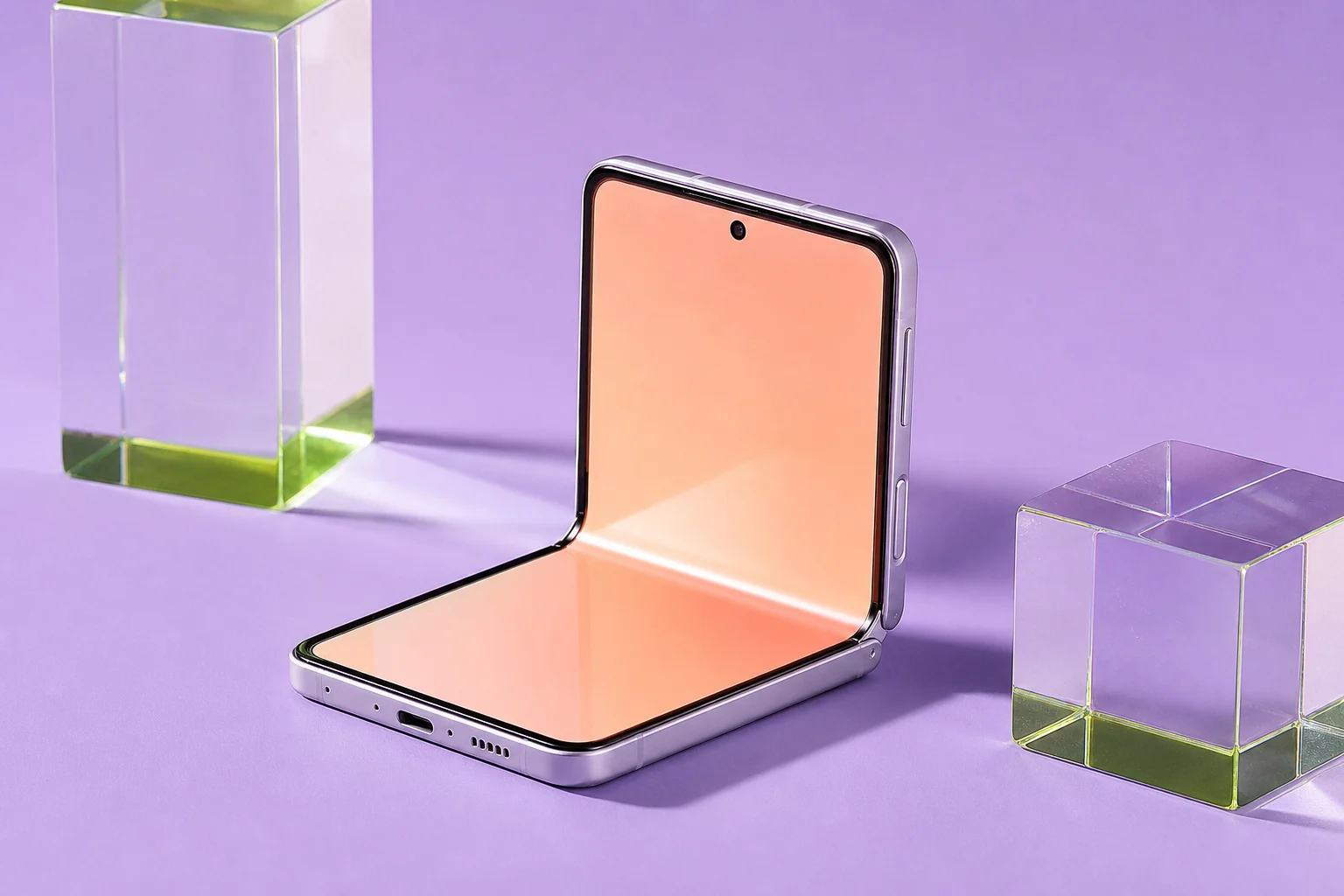
More screen should mean less switching
The strongest large-screen experiences reduce the number of trips between applications. A message can remain visible beside a calendar. Research can sit next to a draft. A photograph can be selected without hiding the conversation asking for it. This is not desktop multitasking miniaturised. It is a chance to design short, connected workflows around touch.
That requires restraint. More panels are not automatically more productive. A small device becomes cognitively heavy when every application insists on occupying part of the screen. The useful foldable is not the one that shows the most. It is the one that makes context easier to keep.
A category, not a verdict
Folding phones do not need to replace the flat rectangle to succeed. Laptops did not invalidate desktops, and tablets did not eliminate either. A mature device market can support several shapes because different lives reward different compromises.
The fold finally makes sense when it stops asking everyone to want one. It can be a confident category for readers, travellers, multitaskers and people who simply enjoy an object that transforms. The hinge earns its place by opening possibilities, not by demanding attention.